Meditation for older adults: gentle ways to begin
You have time to sit now, and you want a start that is comfortable and unhurried.
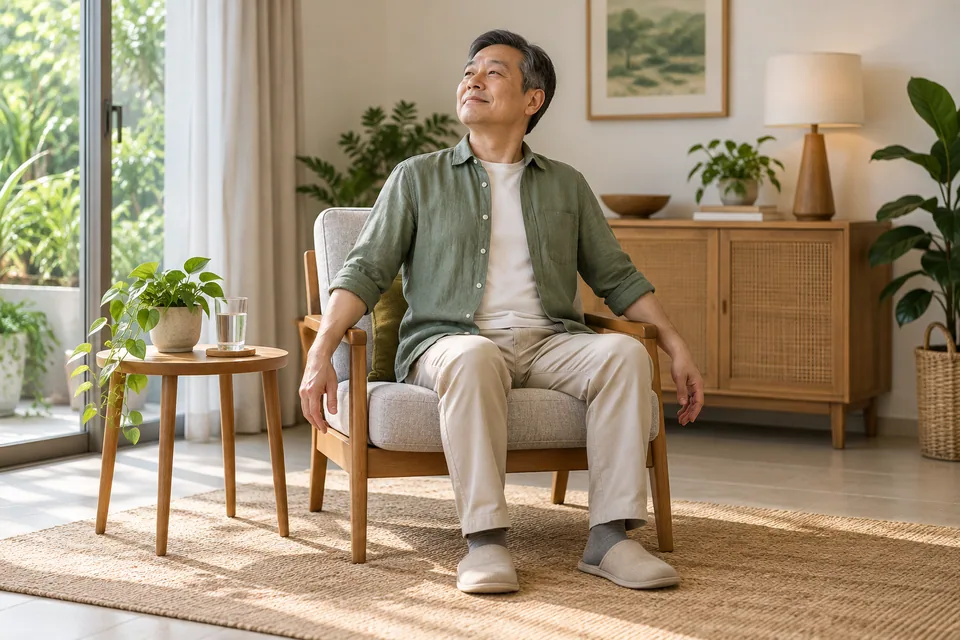
Starting meditation later in life can feel like a quiet gift. There is no rush, no exam and nothing to prove, and you can shape the practice around your own body and your own day.
This guide offers comfortable ways to begin, with short sessions that are easy to stop.
What posture is comfortable?
Choose the position where you can stay relaxed and alert. The options below are all fine.
- A firm chair, feet flat on the floor, back lightly supported.
- A sofa corner with a cushion behind your lower back.
- Lying on a bed or mat, with a small pillow under your head and knees.
- A reclining chair, if you tend to slump forward in an upright one.
If you fall asleep lying down, try a chair next time. No posture needs to be held perfectly, and you can shift whenever you like. Our guide to checking posture options goes deeper.
Try this: a gentle three-minute sit
This works in a chair or lying down, in the morning or after the afternoon rest.
- Settle into your position and let your hands rest wherever they are comfortable.
- Close your eyes, or rest your gaze on one soft spot.
- Breathe in your usual way. Do not try to deepen it.
- Notice where the breath is easiest to feel: nose, chest or belly.
- When your mind wanders to the day, a memory or a plan, gently return to the breath.
- After about three minutes, open your eyes and move your fingers and toes before you get up.
Stand up slowly, especially if you have been lying down.
Should I check with a doctor?
If a health condition makes sitting or breathing practices uncomfortable, please check with your doctor before you begin. Keep your breathing natural and do not hold your breath or push.
NCCIH also advises telling your health care providers about complementary approaches you use, and asking about an instructor’s training and experience1. That helps your doctor see the full picture.
Making it part of an ordinary day
Attach a short sit to something you already do. After morning prayers or a cup of kopi, before the news, or after a walk in the park all work well.
If your hearing or eyesight is not what it was, choose a quiet spot with good light. A friend or family member can sit beside you for company. If sitting for long is hard, a short sit twice a day works just as well as one longer one.
What if I feel unwell during a practice?
If a practice brings up distress, dizziness, discomfort or old painful memories, it is fine to stop. Rest, drink some water and talk to a doctor or counsellor if the feeling stays. Our support page lists where to begin.
Where to go next
For the basics in everyday words, read what is meditation. A body scan meditation can be done lying down, and how long to meditate as a beginner helps you pace yourself.
Our meditation for beginners guides gather everything in one place. Our free meditation timer keeps the time for you and runs in your browser.
When you feel ready, Sadhguru’s free seven-minute guided meditation in the Miracle of Mind app is there to try, whenever it suits you.
Common questions
Do I need to sit on the floor to meditate?
No. A firm chair with your feet flat on the floor works well, and so does a sofa corner with a cushion behind your back. If sitting is uncomfortable, you can lie on a bed or mat with a small pillow under your head and knees.
How long should I sit at the start?
Begin with two to five minutes and stop earlier if you feel tired or uncomfortable. A short sit that feels easy is more useful than a long one that you dread. You can lengthen it slowly if you wish.
Should I check with my doctor first?
If you have a health condition, or if sitting or breathing practices feel uncomfortable, it is sensible to ask your doctor before you begin. Keep the practice gentle, breathe normally and do not strain. Meditation does not replace medical care.
I have a bad knee or back. Can I still practise?
Yes, choose a position that supports you, such as a chair with a cushion, or lying down. Change position whenever you need to. The practice is about attention, so no posture has to be held perfectly.
Sources
- NCCIH advises asking about the training and experience of a meditation instructor and telling your health care providers about complementary approaches you use. NCCIH, US National Institutes of Health
Read next
If you would like a calm voice to follow from a chair or bed, Sadhguru's free guided meditation in the Miracle of Mind app is one easy way to try a short session.